 Biours


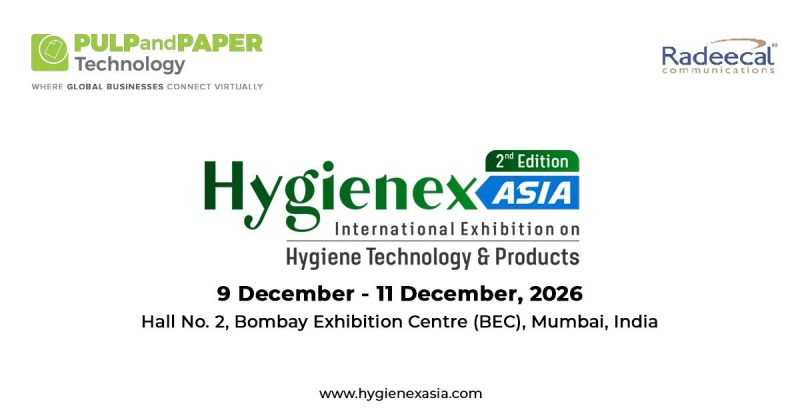
HYGIENEX ASIA 2026 will take place from December 9–11, 2026, at Hall No. 2, Bombay Exhibition Centre (BEC), Mumbai, India. The second edition focuses on hygiene products, raw materials, nonwoven technologies and manufacturing solutions. It brings together manufacturers, suppliers, brand owners and industry professionals seeking new business opportunities.
The exhibition will run alongside Nonwoven Tech Asia 2026. Consequently, visitors can explore a wider range of materials, converting equipment and finished hygiene products. For international buyers, the combined events offer opportunities to research suppliers, evaluate technologies and discuss future product development.
HYGIENEX ASIA 2026: Dates, Venue and Visitor Information
| Event Details | Information |
|---|---|
| Official Event | 2nd HYGIENEX ASIA 2026 |
| Dates | December 9–11, 2026 |
| Venue | Hall No. 2, Bombay Exhibition Centre (BEC) |
| Location | Mumbai, India |
| Organizer | Radeecal Communications |
| Concurrent Exhibition | Nonwoven Tech Asia 2026 |
| December 9–10 | 10:00 AM – 6:00 PM |
| December 11 | 10:00 AM – 5:00 PM |
| Admission | Free entry with compulsory registration |
| Official Website | HYGIENEX ASIA Official Website |
The organizer recommends online pre-registration. Therefore, international visitors should review the latest admission information before traveling.
1. Why HYGIENEX ASIA 2026 Matters for Global Hygiene Buyers
The hygiene industry depends on reliable materials, consistent manufacturing and effective product design. HYGIENEX ASIA brings these topics together through its exhibition and conference format.
Its focus includes baby care, feminine hygiene, adult incontinence, medical nonwovens and personal care products. In addition, the event covers production machinery, testing equipment and sustainability-related technologies.
For procurement teams, this range creates opportunities to compare suppliers across different production stages. Meanwhile, product developers can investigate material properties and manufacturing methods.
However, visitors should evaluate each supplier’s actual capabilities. A company supplying nonwoven fabric may not manufacture finished consumer products. Similarly, machinery suppliers may not provide OEM production services.
2. Major Product and Technology Categories
The official exhibitor profile covers raw materials, finished hygiene products, manufacturing equipment and related solutions.
Nonwoven Fabrics and Raw Materials
Nonwoven materials play an important role in disposable hygiene products. Exhibited categories include spunbond and meltblown fabrics, absorbent materials, adhesives and breathable films.
Moreover, suppliers may present recycled fibers and alternative material options. Buyers should compare performance, consistency and intended applications before choosing materials.
Baby Care and Feminine Hygiene
Baby diapers, wipes, sanitary napkins and related products represent major exhibition categories. Manufacturers can explore product components, converting technologies and packaging solutions.
In addition, brands may research opportunities to improve comfort and product presentation. Nevertheless, safety and performance testing remain essential.
Adult Incontinence and Medical Nonwovens
The exhibition also includes adult incontinence products and selected medical nonwoven applications. These categories may involve specialized absorbency, barrier performance or handling requirements.
Therefore, buyers must confirm relevant product standards and regulatory obligations. Medical applications may require additional documentation and validation.
Production Machinery and Testing Equipment
Machinery exhibitors cover converting, cutting, sealing, packaging and automation technologies. Testing equipment is another important category.
For manufacturers, these solutions can support production planning and quality improvement. However, equipment suitability depends on the product, process and required output.
3. Nonwoven Tech Asia 2026: A Valuable Concurrent Exhibition
Nonwoven Tech Asia 2026 will take place at the same venue and dates. Its program focuses on nonwoven materials, hygiene technology and industrial applications.
Consequently, buyers can explore both hygiene products and their supporting manufacturing technologies during one visit.
The concurrent event also creates opportunities for material suppliers, converters and finished-product manufacturers to connect. For example, a hygiene brand may compare raw material suppliers while researching packaging or automation equipment.
However, nonwoven materials and hydrogels serve different technical functions. Buyers should assess them according to their intended applications rather than treating them as interchangeable materials.
4. Sourcing Opportunities for International Hygiene Brands
International brands often seek manufacturing partners that can support consistent quality and commercial growth. Trade exhibitions provide a useful starting point for identifying potential suppliers.
Nevertheless, sourcing decisions should consider more than product samples and pricing. Buyers must also review documentation, manufacturing capacity and communication processes.
| Buyer Segment | Potential Opportunity | Key Consideration |
|---|---|---|
| Hygiene Product Brands | Research materials and manufacturing technologies | Product performance and consistency |
| Importers and Distributors | Identify suppliers and product categories | Documentation and import requirements |
| Private Label Businesses | Develop differentiated product ranges | Customization and minimum orders |
| Product Development Teams | Explore material and packaging concepts | Testing and technical feasibility |
| Healthcare Product Buyers | Evaluate suitable specialized products | Classification and regulatory compliance |
Furthermore, buyers should confirm whether a supplier manufactures products directly or acts as a trading intermediary. This distinction can affect quality oversight and production planning.
5. Hydrogel Materials and Specialized Skin-Contact Products
Hydrogel technology offers a separate product development direction for certain personal care applications. Unlike conventional nonwoven fabrics, hydrogels contain a water-rich polymer network.
Depending on their formulation, hydrogel materials can support flexible skin-contact product formats. Examples include cosmetic eye patches, facial masks and cooling gel patches.
However, these applications have different technical requirements. Product developers must assess formulation stability, material compatibility and intended use.
Potential Hydrogel Product Development Opportunities
| Product Concept | Development Focus | Potential Customer |
|---|---|---|
| Cooling Gel Patches | Cooling sensation, dimensions and packaging | Suitable personal care brands |
| Hydrogel Eye Patches | Cosmetic formulation and skin compatibility | Beauty and skincare brands |
| Hydrogel Facial Masks | Material performance and product stability | Private label skincare businesses |
| Customized Hydrogel Patches | Application-specific design and testing | Qualified product development teams |
Importantly, a cooling sensation does not establish a therapeutic effect. Similarly, cosmetic hydrogel products should not carry unsupported medical claims.
Companies developing these products can learn more about an experienced Hydrogel Patch Manufacturer. Product-specific technical discussions can help clarify manufacturing feasibility.
6. Quality Control and Supplier Evaluation
Reliable quality management is essential for products that contact the skin. Therefore, buyers should review manufacturing controls and relevant test documentation.
First, define the intended application and target market. Next, discuss material specifications, packaging and storage conditions.
Buyers should also ask about sampling, stability testing and production consistency. In addition, they should confirm which certifications apply to the proposed product.
- Manufacturing experience: Does the supplier have relevant product expertise?
- Material specifications: Can it explain the proposed formulation and components?
- Quality procedures: Which production checks and tests apply?
- Customization: What sizes, designs and packaging options are feasible?
- Documentation: Which product-specific records can the supplier provide?
- Production planning: What are the MOQ, sample process and lead times?
Furthermore, certification scope matters. A manufacturing quality certificate does not automatically establish product approval in every market.
7. OEM/ODM and Private Label Hydrogel Manufacturing
OEM and ODM services can help brands develop customized products without operating their own manufacturing facilities.
Under OEM cooperation, manufacturers generally follow agreed product specifications. In contrast, ODM projects may involve additional development support.
For example, a personal care brand may explore customized hydrogel cooling patches. Another company may develop branded eye patches or facial masks.
However, customization depends on technical feasibility. Formulation compatibility, testing and packaging requirements can influence the final specification.
International buyers can review Biours’ OEM/ODM Manufacturing Services when researching suitable hydrogel products. Early communication can help clarify specifications and sample requirements.
Additionally, Private Label Hydrogel Solutions can support branded product development. Available options depend on the proposed application and manufacturing assessment.
8. How to Prepare for HYGIENEX ASIA 2026
Buyers should prepare clear objectives before attending the exhibition. First, identify relevant product categories and potential suppliers.
Next, review the exhibitor information and arrange meetings where possible. A concise purchasing brief can improve discussions.
For manufacturing projects, include intended applications, target markets and expected quantities. Furthermore, prepare questions about testing, certifications and production schedules.
Visitors should also consider the concurrent Nonwoven Tech Asia exhibition. Its materials and machinery focus may provide additional insights.
Finally, complete the required registration and confirm event arrangements through the organizer’s official website.
9. About Biours: Hydrogel OEM/ODM Manufacturing
Foshan Biours Biosciences Co., Ltd. develops and manufactures hydrogel products for international business customers. With more than 20 years of hydrogel development experience, the company supports brands, importers and distributors.
Its product portfolio includes cooling gel patches, hydrogel eye patches, facial masks and selected functional applications. Moreover, Biours provides customized manufacturing solutions for suitable projects.
The company operates a business office in Guangzhou and a manufacturing facility in Foshan, China. Biours reports ISO 13485 and ISO 22716 certifications. Buyers should confirm certification scope and product-specific documentation.
International buyers can also explore the company’s Beauty Hydrogel Products when developing complementary personal care collections.
Biours does not claim to be an exhibitor at HYGIENEX ASIA 2026. Instead, it provides industry information for businesses researching hydrogel manufacturing opportunities.
For OEM/ODM development, product specifications or private label inquiries, contact [email protected].
Conclusion: Exploring Hygiene Manufacturing Opportunities in Mumbai
HYGIENEX ASIA 2026 will bring hygiene industry professionals together in Mumbai from December 9–11. The event covers materials, finished products, production technologies and testing solutions.
Its concurrent exhibition, Nonwoven Tech Asia, adds further opportunities for supply chain research. Consequently, international buyers can explore different parts of the hygiene manufacturing ecosystem.
Specialized hydrogel products may offer separate opportunities for suitable personal care brands. However, product development requires careful attention to materials, quality and regulatory requirements.
By combining exhibition research with structured supplier evaluation, businesses can make better sourcing decisions and develop more reliable manufacturing partnerships.