 Biours


For businesses sourcing healthcare products, the event provides an opportunity to evaluate suppliers, discover manufacturing technologies, and discuss international distribution partnerships. However, a successful purchasing decision requires more than comparing prices or product samples.
Buyers must also consider quality systems, technical documentation, regulatory classification, and supply reliability. These factors are particularly important when evaluating hydrogel patches, cooling products, and other skin-contact materials for healthcare-related markets.
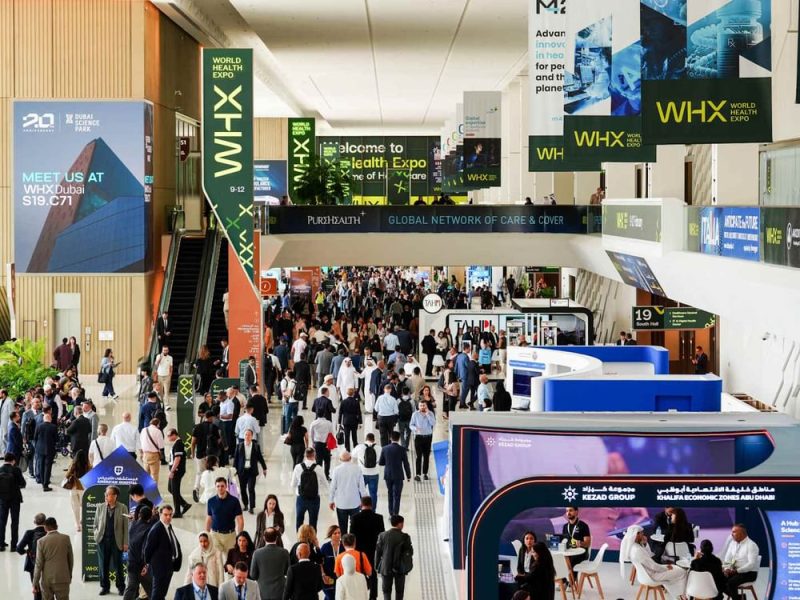
1. World Health Expo Dubai 2027: Event Details
The 52nd edition of the event marks another stage in the development of the former Arab Health exhibition. In 2027, WHX Dubai will operate across two major exhibition venues.
| Event Information | Details |
|---|---|
| Official Name | World Health Expo Dubai 2027 (WHX Dubai) |
| Former Name | Arab Health |
| Dates | January 25–28, 2027 |
| Location | Dubai, United Arab Emirates |
| Venue 1 | Dubai Exhibition Centre, Expo City Dubai |
| Venue 2 | Dubai World Trade Centre |
| Organizer | Informa |
| Industry | Healthcare, medical devices, diagnostics, manufacturing and life sciences |
| Official Website | World Health Expo Dubai |
According to the organizer, the 2027 exhibition also expands its coverage of pharmaceutical, biotechnology, longevity, and wellness sectors. Consequently, buyers can explore a wider range of healthcare technologies and commercial partnerships.
Visitors should review the official floor plans and registration requirements before travelling, especially because the exhibition uses two separate venues.
2. Why Dubai Matters for International Healthcare Sourcing
Dubai serves as a commercial meeting point for businesses operating across the Middle East, Africa, Asia, and Europe. For international healthcare suppliers, this location creates opportunities to meet regional distributors and procurement representatives during one event.
Moreover, healthcare sourcing often involves multiple parties. A brand owner may develop the product concept, a specialist manufacturer may produce it, and a local distributor may manage market entry.
WHX Dubai provides a setting for discussing these relationships. Nevertheless, buyers should assess each partner’s responsibilities before entering a supply agreement.
Regional Distribution Opportunities
Importers can explore products for hospitals, clinics, pharmacies, and selected consumer healthcare channels. However, distribution requirements differ by country and product category.
Supplier and Manufacturing Comparisons
Purchasing teams can compare manufacturing capabilities, quality documentation, customization options, and production capacity. This is particularly useful for businesses developing their own healthcare product brands.
Technical and Commercial Networking
Manufacturers, distributors, and regulatory specialists can discuss market requirements directly. As a result, buyers may identify potential problems before committing to commercial production.
3. Healthcare Product Categories Worth Exploring
World Health Expo covers a broad healthcare ecosystem, including medical equipment, devices, diagnostics, laboratory technology, and supporting services.
For companies interested in hydrogel materials and skin-contact products, the following categories may be relevant.
| Healthcare Category | Potential Sourcing Interest |
|---|---|
| Medical Devices and Consumables | Product specifications, manufacturing quality and regulatory documentation |
| Skin-Contact Products | Material selection, compatibility, packaging and intended use |
| Personal Care and Wellness | Cooling patches, comfort-oriented products and private label development |
| Laboratory and Testing Services | Material evaluation, quality testing and technical verification |
| Healthcare Distribution | Regional market access, logistics and channel partnerships |
Importantly, these categories do not share identical regulatory requirements. A cosmetic hydrogel mask, a general cooling patch, and a medical device may need different evidence and approvals.
4. Hydrogel Technology in Healthcare-Related Products
Hydrogels contain a water-rich polymer network that can be engineered into flexible sheets and patches. Depending on the formulation, structure, and intended purpose, this material platform supports several product applications.
For example, cooling patches may be designed to provide a cooling sensation or personal comfort. Other hydrogel formats may be developed for specific healthcare-related uses, subject to appropriate product design and regulatory assessment.
However, a hydrogel material does not automatically make a finished product a medical device. Classification depends on the product’s intended purpose, claims, mechanism of action, and applicable market rules.
Likewise, a cooling sensation should not be presented as proof of fever treatment, pain relief, or clinical effectiveness without suitable supporting evidence.
International brands evaluating these product formats can review Biours’ hydrogel manufacturing background to understand the company’s experience with cooling patches and other hydrogel applications.
5. OEM and ODM Opportunities for Healthcare Brands
Private label and contract manufacturing arrangements allow businesses to develop branded products without building their own production facilities.
Under an OEM model, the manufacturer generally produces a product against agreed specifications. Meanwhile, ODM projects may involve additional support with formulation, product structure, packaging, and development.
Before selecting either approach, buyers should define the product’s intended market and regulatory status. These decisions influence testing requirements, labeling, technical documentation, and production controls.
For hydrogel projects, customization may involve patch dimensions, material characteristics, packaging formats, and other technically feasible features.
Biours provides hydrogel OEM and ODM manufacturing services for international brands and distributors. Project requirements can be discussed during technical evaluation and sampling.
Businesses considering branded products may also explore private label hydrogel patch manufacturing.
6. Evaluating Healthcare Manufacturers: A Buyer Checklist
Healthcare procurement requires structured supplier qualification. Even when a product appears simple, poor documentation or inconsistent production can create significant commercial risks.
| Evaluation Area | Questions for the Manufacturer |
|---|---|
| Quality Management | Which quality standards cover the relevant facility and manufacturing activities? |
| Product Classification | How is the product classified in the intended destination market? |
| Testing | Which safety, stability, compatibility and performance tests support the product? |
| Documentation | Are technical specifications, batch records and applicable certificates available? |
| Customization | Which material, size, formulation and packaging options are feasible? |
| Commercial Terms | What are the MOQ, sampling costs, production lead times and payment terms? |
| Traceability | How are raw materials, production batches and product changes controlled? |
Buyers should verify that a supplier’s certifications apply to the correct company, site, processes, and product scope. For example, ISO 13485 certification relates to a medical device quality management system. It does not, by itself, authorize every finished product for sale in every country.
Similarly, product-specific regulatory evidence should be checked independently. This is especially important when the supplier offers both cosmetic and healthcare-related products.
7. Regulatory Considerations for Middle East Markets
Healthcare market entry requirements vary across the United Arab Emirates and other Middle Eastern countries. Therefore, importers should confirm the applicable rules with the relevant national authorities or qualified regulatory advisers.
For a proposed medical device, buyers may need to assess classification, conformity evidence, registration obligations, authorized representation, labeling, and post-market responsibilities.
For a cosmetic or general wellness product, a different regulatory pathway may apply. Consequently, brands should avoid using medical claims simply to strengthen product marketing.
Product documentation should reflect the actual intended use and supporting evidence. In addition, commercial contracts should identify which party is responsible for regulatory submissions and local distribution compliance.
8. From Product Concept to Commercial Supply
Developing a healthcare-related hydrogel product usually involves several stages. First, the buyer establishes the intended user, product function, and target market.
Next, the manufacturing team evaluates technical feasibility and prepares suitable samples. The buyer can then review material characteristics, packaging, and preliminary performance against the agreed specifications.
After that, the parties should define testing requirements and approval criteria. Finally, commercial production can proceed once the necessary technical and regulatory conditions have been addressed.
For long-term partnerships, buyers should also establish procedures for handling complaints, production changes, and quality issues. These arrangements help protect supply continuity.
9. How to Prepare for WHX Dubai 2027
Because the exhibition operates across two venues, visitors should prepare their schedules carefully. The organizer identifies different product zones and industry activities at each location.
- Define purchasing priorities. Decide whether you need medical devices, consumables, wellness products, or manufacturing partners.
- Review the venue layout. Identify relevant halls at Dubai Exhibition Centre and Dubai World Trade Centre.
- Prepare a supplier brief. Include intended use, target markets, estimated volumes, and documentation requirements.
- Schedule technical meetings. Prioritize manufacturers with relevant product and quality management experience.
- Compare evidence, not just prices. Request samples, specifications, certificates, and realistic production timelines.
- Plan post-show follow-up. Record responsibilities, quotation deadlines, and any additional regulatory questions.
For current venue guidance and visitor information, consult the official WHX Dubai travel and venue guide.
10. About Biours: Hydrogel Manufacturing for Global Brands
Foshan Biours Biosciences Co., Ltd. is a China-based hydrogel manufacturer with more than 20 years of experience in hydrogel product development and production.
The company serves international brands, importers, and distributors across skincare, personal care, and selected healthcare-related product categories. Its portfolio includes cooling gel patches, hydrogel eye patches, facial masks, and other functional patch formats.
Biours reports quality management and manufacturing certifications including ISO 13485 and ISO 22716. Buyers should verify the applicable scope and request product-specific documentation for their intended markets.
In addition to existing product formats, the company supports discussions about customized hydrogel products, packaging development, sampling, and manufacturing requirements.
Biours is not presented as a confirmed exhibitor at WHX Dubai 2027. This article provides industry information for buyers researching healthcare manufacturing and sourcing opportunities.
11. Final Thoughts
World Health Expo Dubai 2027 offers international healthcare buyers an opportunity to explore manufacturing capabilities, new technologies, and regional distribution partnerships.
For businesses sourcing hydrogel products, successful procurement depends on clear product specifications, suitable testing, supplier qualification, and realistic regulatory planning.
Brands and distributors interested in customized hydrogel manufacturing can contact Biours at [email protected] to discuss product development, OEM/ODM cooperation, and sourcing requirements.