 Biours


Introduction: Why Cooling Nose Patches Are Technically Challenging
At first glance, a cooling nose patch appears to be a simple product—small in size, easy to apply, and straightforward in function. However, from a manufacturing and formulation perspective, it is one of the most technically demanding types of functional patches.
Unlike larger body patches, nose patches must operate within a highly dynamic and sensitive area. The nasal region involves constant movement, exposure to airflow, and increased skin sensitivity. This means that every aspect of the product—from cooling performance to adhesion—must be carefully engineered.
For brands aiming to deliver consistent user experience, understanding the technical foundation behind a high-quality cooling nose patch is essential.
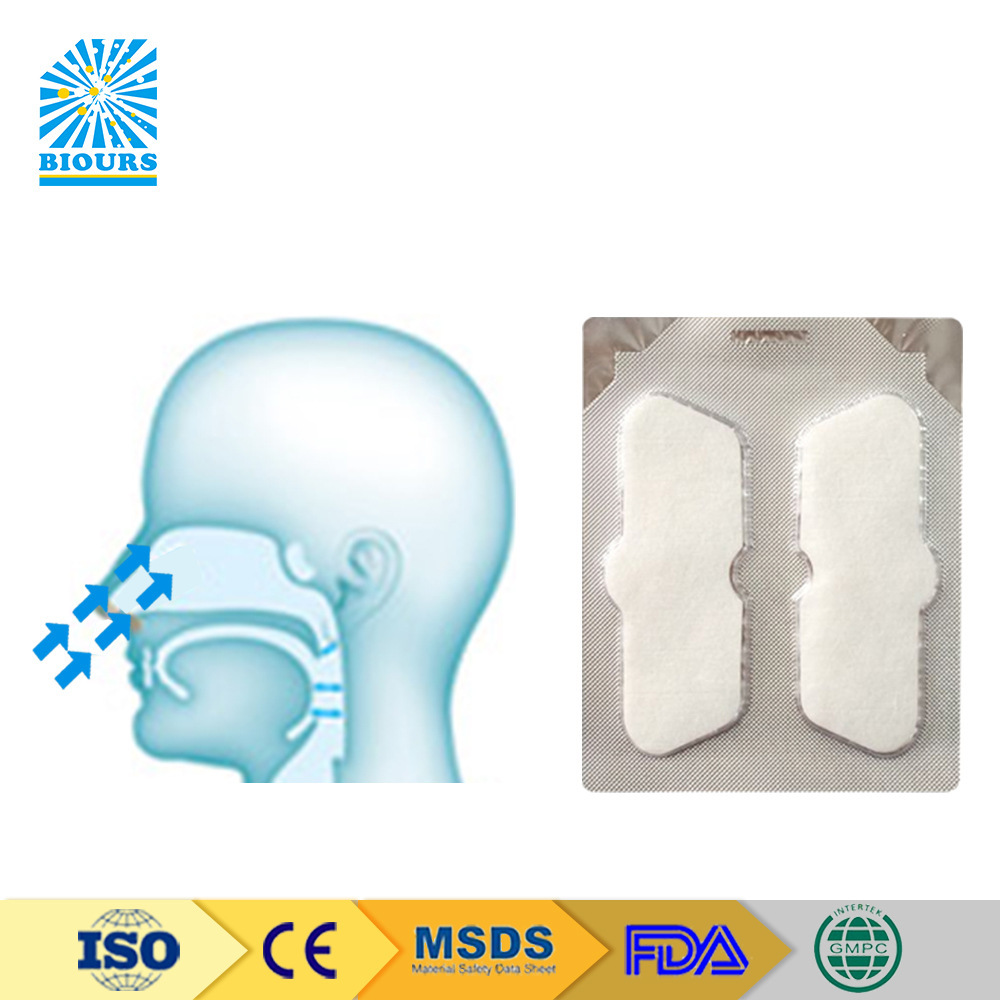
Cooling Mechanism: Evaporation vs. Controlled Release
The cooling sensation in a nose patch is not simply the result of adding mint or menthol-based ingredients. It depends on how the formulation interacts with skin temperature, air exposure, and evaporation rate.
1. Immediate Cooling Effect
Ingredients such as mint oil provide an instant sensation through volatile compounds. When applied to the skin, these compounds evaporate quickly, creating a rapid cooling perception.
However, without proper formulation control, this effect can:
- Fade too quickly
- Become too intense initially
- Lead to uneven user experience
2. Sustained Cooling Performance
To maintain a consistent cooling effect for several hours (up to 8 hours), the formulation must include a controlled release system.
This involves:
- Balancing volatile and non-volatile components
- Regulating evaporation speed
- Stabilizing active ingredients within the patch matrix
Achieving this balance is one of the key technical challenges that differentiates high-quality products from low-cost alternatives.
Essential Oil Integration: Stability and Controlled Diffusion
The inclusion of essential oils such as eucalyptus, rosemary, and lemon balm adds both value and complexity to the product.
Functional Role
These oils contribute to:
- Perceived breathing comfort
- Refreshing sensory experience
- Emotional relaxation
Technical Challenges
Essential oils are inherently volatile and sensitive to environmental conditions. Without proper formulation, common issues include:
- Rapid scent loss
- Uneven diffusion
- Ingredient degradation over time
To address these challenges, manufacturers must implement:
- Encapsulation or stabilization techniques
- Uniform dispersion within the patch
- Compatibility testing with base materials
This ensures that the scent remains consistent, balanced, and long-lasting throughout the usage period.
Adhesion Engineering: The Most Difficult Area to Control
Among all technical aspects, adhesion on the nasal area is often the most difficult to optimize.
Why Nose Adhesion Is Challenging
The nasal region presents several difficulties:
- Constant movement due to facial expressions
- Presence of natural skin oils
- Curved and uneven surface
- Frequent airflow exposure
These factors can easily cause:
- Edge lifting
- Patch displacement
- Reduced effectiveness
Requirements for High-Performance Adhesion
A well-designed nose patch must achieve:
- Strong initial adhesion
- Flexibility to adapt to movement
- Stability over extended wear
- Pain-free removal
This requires advanced adhesive formulation that balances holding power and skin comfort.
Structural Design: Small Size, High Precision
Unlike larger patches, nose patches require extremely precise structural design.
Ergonomic Shape
The patch must conform to the nasal bridge and surrounding contours, ensuring:
- Full contact with the skin
- Even distribution of active ingredients
- Minimal interference with breathing
Thickness and Flexibility
If the patch is too thick:
- It may feel uncomfortable
- It may detach more easily
If too thin:
- It may not retain sufficient active ingredients
Achieving the right balance requires precise material engineering and production control.
Breathability and Skin Compatibility
Since the patch is applied to a sensitive facial area, breathability is critical.
A high-quality cooling nose patch should:
- Allow airflow through the material
- Prevent moisture buildup
- Reduce risk of skin irritation
In addition, all ingredients and materials must be carefully selected to ensure:
- Skin compatibility
- Low irritation risk
- Suitability for extended wear
Duration Control: Achieving Up to 8 Hours of Performance
Maintaining performance over several hours requires coordination between multiple factors:
- Cooling agent release rate
- Essential oil diffusion
- Adhesion stability
- Material integrity
If any one of these factors fails, the overall product performance will decline.
This is why achieving true 8-hour effectiveness is not just a claim—it is the result of precise formulation and engineering.
Manufacturing Consistency: From Lab to Mass Production
Even with a well-designed formula, large-scale production introduces additional challenges:
- Variability in raw materials
- Environmental conditions during production
- Coating and lamination precision
- Storage stability
Manufacturers with extensive experience in functional patch production are better equipped to control these variables and ensure:
- Consistent product quality
- Reliable batch performance
- Scalable manufacturing
Common Technical Problems in Low-Quality Products
Understanding common issues in the market helps highlight the importance of proper manufacturing:
- Cooling effect that fades too quickly
- Overly strong initial sensation causing discomfort
- Weak adhesion or early detachment
- Strong but short-lived fragrance
- Skin irritation after extended use
These problems are typically the result of insufficient R&D capability and lack of process control.
Why Technical Expertise Determines Market Competitiveness
As the cooling nose patch category becomes more competitive, differentiation is increasingly based on performance consistency and user experience, rather than just price or packaging.
Products that successfully combine:
- Stable cooling performance
- Long-lasting aroma
- Comfortable adhesion
- Skin-friendly materials
are more likely to achieve:
- Higher customer satisfaction
- Better reviews
- Stronger brand loyalty
Conclusion
The cooling nose patch is a compact yet highly sophisticated product that requires precise control over cooling mechanisms, essential oil delivery, adhesion engineering, and structural design.
For brands and distributors, selecting a manufacturer with strong technical expertise is essential to ensure product quality, consistency, and long-term market success.
Looking for a manufacturer with strong technical expertise in cooling and aromatherapy patches?
We support OEM development and customization for global brands.
[email protected]