 Biours Biosciences Co., Ltée.


In the body cooling and comfort category, Les feuilles de gel rafraîchissantes often appear visually similar on the surface. Taille, color, and even packaging may look nearly identical across different suppliers. Cependant, real product quality is defined by structure, formulation, et le contrôle de la production, not appearance.
For brands planning long-term sales and scalable production, understanding these technical differences is critical.
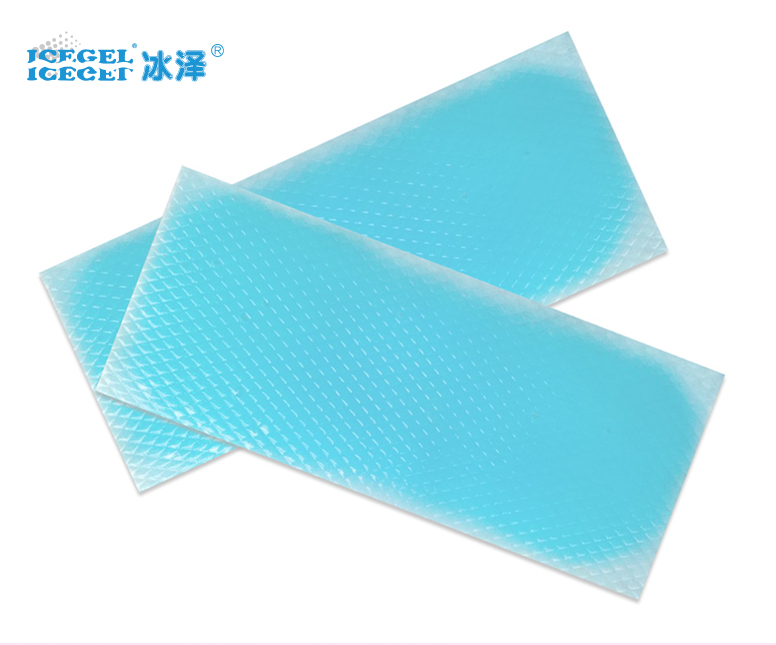
The Role of Hydrogel Structure in Cooling Performance
At the core of a cooling gel sheet lies the hydrogel matrix. This structure determines how effectively the sheet retains moisture, delivers cooling, and maintains flexibility during use.
A professionally engineered hydrogel balances three key factors:
-
Water retention for sustained cooling
-
Élasticité for comfortable skin contact
-
Structural stability to prevent deformation during wear
If the gel contains too much free water, it may feel initially cool but lose effectiveness quickly. If water content is too low, cooling intensity and comfort are compromised. Achieving this balance requires precise formulation and consistent process control.
Cooling Duration vs. Initial Cooling Sensation
Many low-quality cooling gel sheets focus on delivering a strong initial cooling sensation. While this may impress users briefly, the effect often fades rapidly, leading to disappointment.
High-quality cooling gel sheets are designed for controlled, gradual cooling release, providing comfort over an extended period rather than a short burst. This is especially important for applications involving long wear times, such as evening relaxation or overnight use.
From a brand perspective, sustained performance directly influences user satisfaction and repeat purchases.
Adhesion and Skin Compatibility in Real Use
Cooling gel sheets must stay in place without irritating the skin. This is more challenging than it appears, especially when sheets are applied to moving areas like shoulders, les jambes, or back.
Professional designs focus on:
-
Even adhesion distribution
-
Breathability to reduce skin stress
-
Gentle removal without residue
Poor adhesion can lead to curling, slipping, or premature detachment, all of which negatively affect user perception—even if the cooling effect itself is acceptable.
Why Production Consistency Matters More Than Lab Samples
A common risk in OEM sourcing is that lab samples perform well, but large-scale production shows inconsistencies. This usually stems from insufficient process standardization.
Reliable OEM manufacturers control:
-
Hydrogel crosslinking parameters
-
Coating thickness uniformity
-
Curing time and temperature stability
These factors ensure that every batch delivers the same cooling sensation and physical performance.
The Hidden Difference Between “Can Be Made” and “Can Be Repeated”
D'un point de vue technique, many factories can produce a cooling gel sheet once. The real challenge is producing it consistently, at scale, au fil du temps.
Pour les marques, this distinction determines whether a product can evolve into a core, long-term SKU or remain a short-lived trial item.
Conclusion
A professional cooling gel sheet is defined not by how it looks, but by how it performs over time and across production batches. Hydrogel structure, cooling release stability, adhesion design, and manufacturing control all contribute to a product’s true quality.
Brands that understand these technical fundamentals are better positioned to select reliable OEM partners and build cooling products that succeed beyond initial launches.