 Biours Biosciences Co., Ltd.


Product Technology & Quality Perspective
In the global market, Parches Lumbares often appear similar at first glance. Tamaño, forma, and basic function may seem interchangeable, yet user experience and long-term performance vary significantly between products. These differences rarely come from surface design—they originate from internal structure, material selection, y el control de producción.
Para marcas y compradores profesionales, understanding what defines a truly professional Lumbar Patch is essential when selecting products that can support long-term market growth rather than short-term sales.
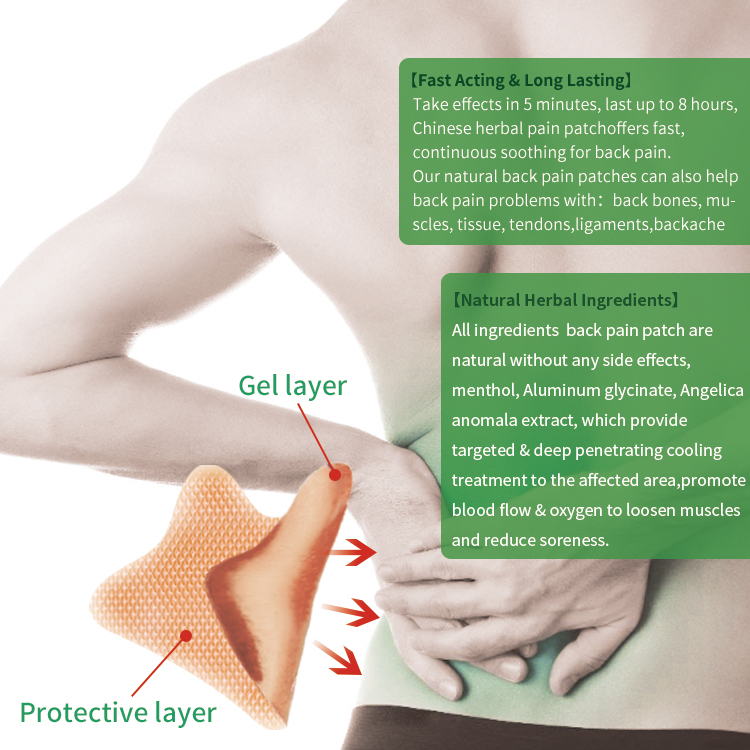
The Lumbar Area: A High-Demand Application Zone
Unlike smaller or relatively static body areas, the lower back is constantly involved in movement. Bending, twisting, stretching, y los cambios de postura generan estrés mecánico continuo en cualquier parche aplicado.
Esto significa que un Parche Lumbar debe cumplir con requisitos de rendimiento más altos que muchos otros parches de cuidado corporal:
-
Debe permanecer firmemente adherido durante el movimiento
-
Debe adaptarse al estiramiento de la piel sin causar incomodidad
-
Debe mantener un contacto constante durante un tiempo prolongado de uso
El fallo en cualquiera de estas áreas resulta rápidamente en comentarios negativos de los consumidores y en una disminución de las compras repetidas.
Por qué importa la estructura de hidrogel
Las estructuras a base de hidrogel son ampliamente preferidas para Parche Lumbar debido a sus propiedades amigables con la piel y su adaptabilidad. Sin embargo, no todos los sistemas de hidrogel rinden igual.
Una estructura de hidrogel bien diseñada proporciona:
-
Elasticidad equilibrada para seguir el movimiento del cuerpo
-
Cohesión suficiente para prevenir desgarros o deformaciones
-
Comfortable skin contact without excessive stickiness
If the gel is too rigid, users experience restriction and discomfort. If it is too soft, the patch may slide, arrugas, or lose shape during use.
Achieving this balance requires precise formulation control and extensive production testing—factors that directly separate mature OEM manufacturers from inexperienced suppliers.
El grosor, Water Content, and Wear Comfort
Patch thickness plays a critical role in both performance and perception. Overly thick patches can feel bulky under clothing, while ultra-thin designs may lack durability or support.
Professional Lumbar Patches are engineered to achieve:
-
A thickness that ensures structural integrity
-
Adequate water content for comfort and skin affinity
-
Long-lasting performance throughout the intended wear period
These parameters must remain stable across mass production batches. Even minor variations can lead to noticeable differences in consumer experience.
Release Stability and User Experience Consistency
Whether a Lumbar Patch delivers cooling, warming, or neutral comfort, release stability is a key quality indicator.
Inconsistent release behavior may cause:
-
Uneven sensation during wear
-
Shortened effective duration
-
Consumer dissatisfaction across different batches
Desde la perspectiva de la marca, consistent experience is essential for building trust. Desde la perspectiva de un OEM, it reflects production discipline and technical maturity.
Why “Similar Looking” Patches Perform Differently
Many procurement teams encounter this challenge: two Lumbar Patches look nearly identical, yet market feedback differs dramatically.
The reason lies in factors that are invisible to consumers but critical to professionals:
-
Hydrogel crosslinking control
-
Adhesion-to-flexibility balance
-
Structural resilience under movement
These elements are refined through long-term production experience, not single-sample development.
The OEM Advantage in Technical Stability
Para marcas de etiqueta privada, working with an OEM partner that understands these structural nuances reduces development risk significantly.
A technically mature manufacturer can:
-
Maintain consistent performance across large volumes
-
Support product optimization without structural redesign
-
Ensure scalability as demand grows
This technical reliability becomes especially valuable when brands expand into new markets or increase order frequency.
Conclusión
A professional Lumbar Patch is defined not by appearance, but by how well it performs under real-life movement, extended wear, and mass production conditions. Estructura, materials, y la estabilidad determina si un producto puede apoyar el éxito de marca a largo plazo.
Para marcas y compradores OEM, entender estos fundamentos técnicos es clave para seleccionar productos—y socios—que ofrezcan resultados sostenibles.